Darrell Rials
Enterprise Architect
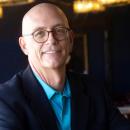
Darrell Rials is an accomplished software and enterprise developer and architect, having helped teams deliver worthwhile technology solutions for over 25 years in the engineering, manufacturing, building automation controls, financial services, and telecommunications industries. A lifelong learner, writer, and teacher, Darrell maintains an abundance mindset, believes that the way we treat people matters a lot, and is grateful for life’s opportunities to experience wonder, challenge, and change.
Presentations
We live in a world of complexity. Complex societies, complex language and mathematics and science – all navigable. Indeed, if we are to thrive individually and collectively, navigating this complexity is essential. We software professionals – current, semi-current (former), and near-future – have ourselves given rise to layers upon layers of systems and software complexity. We didn’t (always) anticipate the extant environmental challenges, but the systems we built inevitably interacted with other complex systems. We often knowingly create this multiplier effect on complexity, out of necessity. But how do we navigate it? Certainly, our tools help us, but they are mere tools, powerful though they are. Are we really that unsure of our capabilities? We don’t have to be!
In this session, Darrell Rials explores examples of extraordinary complexity, both in the natural world and in societal systems. He lays out some fundamental principles and mental models, describing the ways that individuals and systems of species must adopt, adapt and evolve in order to thrive in complex environments. Darrell then presents a humble challenge to the participants: Can you be instruments for building the next generation of adaptable, evolvable humanity-serving automated systems?
As software professionals, we deal with complexity and uncertainty on a daily basis. In fact, we are often masters at understanding all the various forms of systems complexity, and often are proficient at coherently communicating designs and solutions.
Unfortunately, within and amongst organizations, we set ourselves up as “the expert” – as prima donnas, if you will. Oftentimes, we set up unnecessary psychological competitions amongst peers, rather than treating peers and the wider software community as just that: collaborative and self-improving communities. Surely, there are better ways of working as a community and a society that promote individual and community growth, learning, and exponential improvement.
In this workshop, Darrell Rials presents an argument for participating in open, safe-space, supportive collaborations: software and systems architecture guilds. Darrell briefly highlights examples of the guild (or collegium) concept in historical and current-day contexts, with their benefits and detriments, and explains why many of today’s attempts at sustaining organization-driven architecture teams are nothing more than vain attempts at empire-building or box-checking procedural show.
Darrell lays out some key grounding principles for the effective collaboration of architects in a broad-based software practitioners’ guild, and addresses a few immediate questions about the mechanics of undertaking and sustaining such endeavor as practicing architects. Almost as importantly, we address a key question: What’s in it for me?