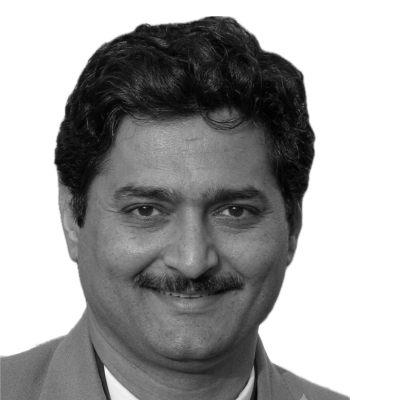
RohitBhardwaj
Rohit Bhardwaj is a Director of Architecture working at Salesforce. Rohit has extensive experience architecting multi-tenant cloud-native solutions in Resilient Microservices Service-Oriented architectures using AWS Stack. In addition, Rohit has a proven ability in designing solutions and executing and delivering transformational programs that reduce costs and increase efficiencies.
As a trusted advisor, leader, and collaborator, Rohit applies problem resolution, analytical, and operational skills to all initiatives and develops strategic requirements and solution analysis through all stages of the project life cycle and product readiness to execution.
Rohit excels in designing scalable cloud microservice architectures using Spring Boot and Netflix OSS technologies using AWS and Google clouds. As a Security Ninja, Rohit looks for ways to resolve application security vulnerabilities using ethical hacking and threat modeling. Rohit is excited about architecting cloud technologies using Dockers, REDIS, NGINX, RightScale, RabbitMQ, Apigee, Azul Zing, Actuate BIRT reporting, Chef, Splunk, Rest-Assured, SoapUI, Dynatrace, and EnterpriseDB. In addition, Rohit has developed lambda architecture solutions using Apache Spark, Cassandra, and Camel for real-time analytics and integration projects.
Rohit has done MBA from Babson College in Corporate Entrepreneurship, Masters in Computer Science from Boston University and Harvard University. Rohit is a regular speaker at No Fluff Just Stuff, UberConf, RichWeb, GIDS, and other international conferences.
Rohit loves to connect on http://www.productivecloudinnovation.com.
http://linkedin.com/in/rohit-bhardwaj-cloud or using Twitter at rbhardwaj1.
AI has permanently transformed the role of Enterprise Architects. Traditional architectures built around data, applications, and integration are no longer enough. Modern intelligent systems rely on retrieval-augmented reasoning (RAG), relationship-driven graph reasoning (GraphRAG), and autonomous AI agents that must operate safely, predictably, and in alignment with business goals.
AI is moving from pilots to production faster than most enterprises are prepared for. Over the next 3–5 years, architectures must evolve to support agentic workflows, governed AI, secure inference, and cost-efficient operations. This session gives you a practical blueprint for building an AI-native enterprise architecture—powered by MCP/LangGraph orchestration, GraphRAG retrieval, ISO/IEC 42001 governance, NIST AI RMF safety controls, confidential computing, and post-quantum cryptography.
“By 2030, 80 percent of heritage financial services firms will go out of business, become commoditized, or exist only formally but not competing effectively”, predicts Gartner. This session explores the integration of AI, specifically ChatGPT, into cloud adoption frameworks to modernize legacy systems. Learn how to leverage AWS Cloud Adoption Framework (CAF) 3.0, Microsoft Cloud Adoption Framework for Azure, and Google Cloud Adoption Framework to build cloud-native architectures that maximize scalability, flexibility, and security. Designed for architects, technical leads, and senior IT professionals, this talk provides actionable insights and strategies for successful digital transformation.
Enterprises are moving from single AI agents to networks of agents that trigger thousands of API calls, retries, and tool-chains per prompt. Without orchestration discipline and APIs built for AI-scale, systems buckle under bursty load, retry storms, cache-miss spikes, inconsistent decisions, and runaway costs. This talk shows how to combine MCP (Model Context Protocol) with proven inter-agent orchestration patterns — Supervisor, Pub/Sub, Blackboard, Capability Router — and how to harden APIs for autonomous traffic using rate limits, dedupe, backpressure, async workflows, resilient caching, and autoscaling without bill shock.
AI inference is no longer a simple model call—it is a multi-hop DAG of planners, retrievers, vector searches, large models, tools, and agent loops. With this complexity comes new failure modes: tail-latency blowups, silent retry storms, vector store cold partitions, GPU queue saturation, exponential cost curves, and unmeasured carbon impact.
AI systems behave fundamentally differently from traditional software — they reason, retrieve, learn, and act with autonomy. These behaviors introduce new failure modes: retry storms, inference cost surges, misaligned agent actions, semantic drift, and retrieval errors. Most system design approaches were never built to handle these risks. This talk presents the A.R.C.H.A.I. Blueprint (AI-Ready Contextual Human-Aligned Initiative), a modern, AI-first architecture methodology that helps organizations design systems that are safe, scalable, resilient, and aligned with human intent.
AI, agentic workflows, digital twins, edge intelligence, spatial computing, and blockchain trust are converging to reshape how enterprises operate. This session introduces Enterprise Architecture 4.0—a practical, future-ready approach where architectures become intelligent, adaptive, and continuously learning.
Large Language Models unlock new capabilities—and expose brand-new attack surfaces. From prompt injection and data exfiltration to model denial-of-service and insecure plugin calls, adversaries are exploiting weaknesses traditional AppSec never anticipated. The new OWASP LLM Top-10 provides a shared vocabulary for AI risks; this session turns that list into actionable engineering practice. You’ll learn how to threat-model LLM endpoints, design guardrails that actually block malicious behavior, sandbox tools and plug-ins with least privilege, and align your mitigations to the NIST AI Risk Management Framework for audit-ready governance.
Zero fluff.